
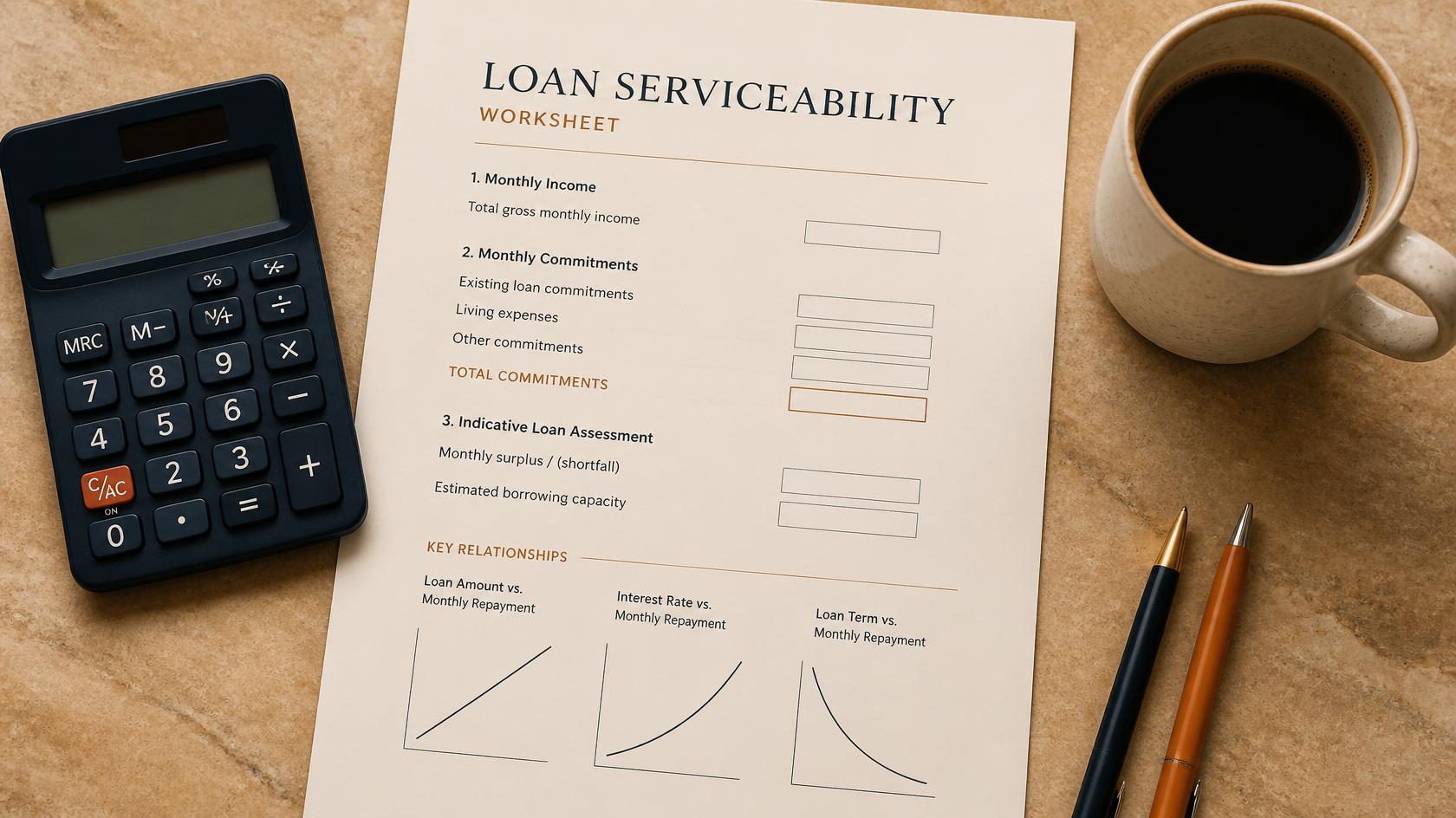
Before you can seriously start property shopping in Sydney, you need a realistic answer to one question: how much can you actually borrow? Borrowing capacity — sometimes called your maximum loan amount — is calculated differently by every lender, which is why the same financial position can produce meaningfully different numbers depending on who you ask.
What Lenders Actually Look At
Lenders assess borrowing capacity using a combination of your income (base salary, verified overtime or bonuses, rental income if applicable), your existing debts and their minimum repayments (credit cards, personal loans, car loans, existing mortgages, and even Buy Now Pay Later facilities), your living expenses (assessed against a benchmark, not just your self-reported budget), and a mandatory serviceability buffer added on top of the actual interest rate to test whether you could still service the loan if rates rose. This buffer is set by regulatory guidance and applied by all lenders, though the specific rate can shift over time, so always check current settings with a broker or lender directly rather than relying on a remembered figure.
Why the Same Person Gets Different Numbers From Different Lenders
Each lender has its own internal policy on how it treats specific income types (casual income, self-employed income, rental income, overtime), its own living expense benchmarks, and its own risk appetite for certain postcodes, property types, or occupations. This is why a mortgage broker who can compare multiple lenders’ policies — rather than a single bank’s own calculator — often surfaces meaningfully more borrowing capacity for the same financial position.
Common Factors That Reduce Borrowing Capacity Unexpectedly
- Credit card limits (even on cards you don’t use) — lenders typically assess the full limit as a potential liability, not your current balance.
- HECS/HELP debt — treated as an ongoing repayment obligation that reduces net income for assessment purposes.
- Buy Now Pay Later facilities — increasingly factored into serviceability assessments by most lenders.
- Existing loans you’re a guarantor on — even if you’re not the one making repayments, guarantor obligations can be included in your liability assessment.
Practical Steps to Improve Your Position
Before applying, consider closing or reducing the limit on credit cards you don’t need, paying down or consolidating existing debts where possible, and getting a clear read on your actual monthly expenses rather than an optimistic estimate. None of these guarantee a specific outcome, but they remove some of the friction points that commonly reduce assessed capacity.
Getting a Genuine Read on Your Number
Bank-specific online calculators give a rough indication but rarely reflect your full financial picture or the specific lender policies that might work in your favour. A mortgage broker — someone like the team at Vista Financial Group — can run your actual figures against multiple lenders’ current policies and give you a realistic borrowing range before you start seriously shopping, which also strengthens your negotiating position since you’ll know your ceiling with more confidence than a single online estimate provides.
Once you have a clear borrowing capacity figure, it’s worth understanding how different loan structures — covered in our guide on offset accounts vs redraw facilities — can affect how efficiently you use that borrowing over the life of the loan.
Frequently Asked Questions
Will getting pre-approval affect my credit score?
A formal pre-approval application typically involves a credit check, which can have a small, temporary impact on your credit score — ask your broker whether an indicative assessment first, before a formal application, is a suitable first step.
Does my borrowing capacity change if I change jobs before applying?
Potentially, yes — lenders generally want to see a stable income history, and a recent job change (particularly a probation period or a shift to casual or contract work) can affect how your income is assessed.
Should I get pre-approval from multiple lenders at once?
Generally no — multiple formal applications in a short period can affect your credit file; a broker comparing lender policies before you formally apply is a better approach than applying broadly yourself.
Key Takeaway
Your borrowing capacity isn’t a single fixed number — it changes with lender policy, your existing liabilities, and how your income is assessed. Getting a genuine, broker-verified figure before you start inspecting properties saves considerable wasted time later in your search.